40Ch Fpv Goggles Explained: A UK Buyer's Guide
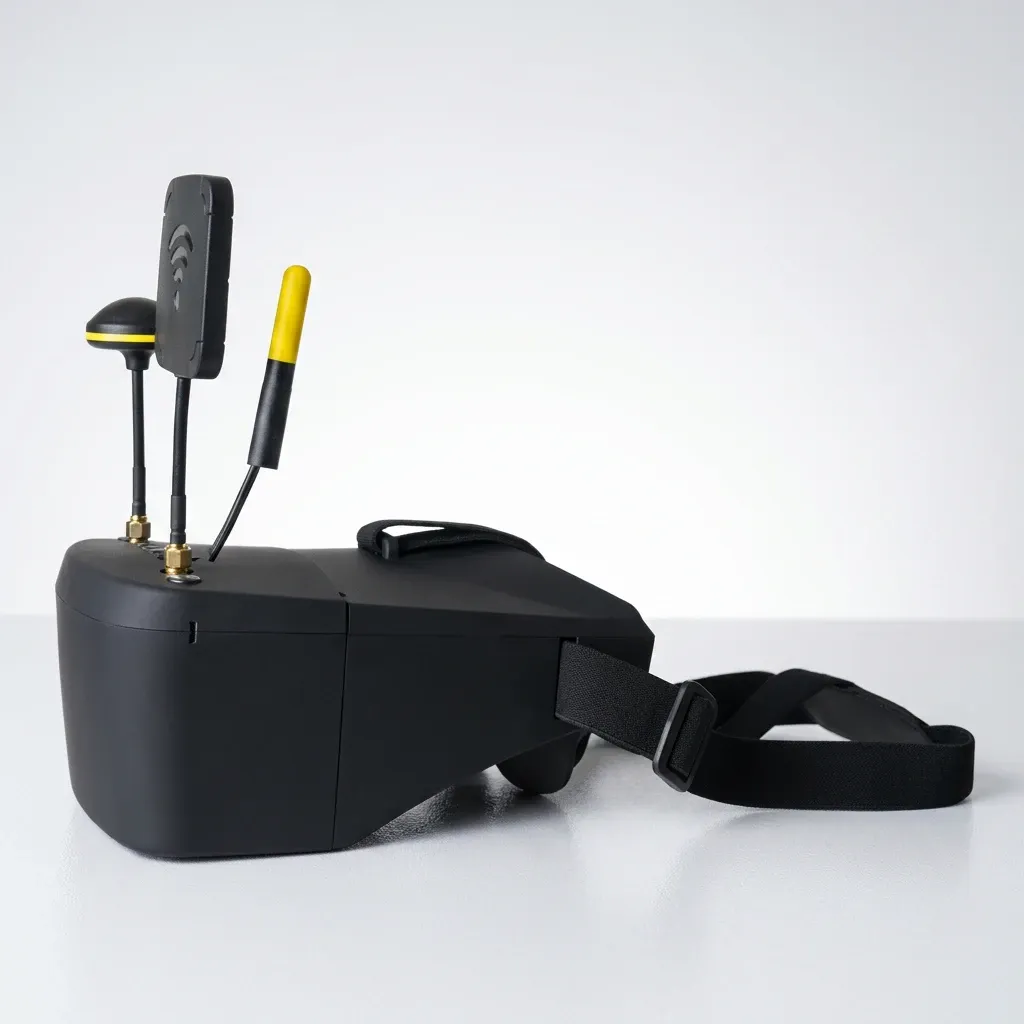
40ch fpv goggles are analogue FPV goggles with access to 40 channels across the 5.8GHz band, helping UK pilots find a clean video frequency, reduce interference, and fly with other pilots more reliably. In practice, they matter most because they support common bands such as RaceBand, which is widely used for club flying and racing.
TL;DR: If you fly analogue drones in the UK, 40ch fpv goggles are the standard choice because they let you tune across five 5.8GHz bands, including RaceBand, improve compatibility with most VTXs, and make it easier to avoid static and overlap. Based on our testing, pairing 40-channel support with a true diversity receiver gives the most dependable results for typical British flying spots.
Key Takeaways
- 40ch fpv goggles provide access to five distinct 5.8GHz bands (A, B, E, F, and R), offering 40 individual channels to tune your analogue video feed.
- RaceBand (Band R) is especially important for flying with multiple pilots, as its evenly spaced frequencies help prevent signal bleed.
- Dual receiver setups combined with 40CH support usually deliver the most stable live video, particularly when navigating behind obstacles.
- According to UK guidance, pilots should follow Ofcom rules on 5.8GHz transmission power, with 25mW commonly referenced for unlicensed use.
What are 40CH FPV goggles?
Analogue video transmission relies on radio frequencies to send a live camera feed from the drone to the pilot's headset. Most commonly, this uses the 5.8GHz spectrum. However, this is not just one frequency; instead, it is split into multiple channels grouped into standard bands.
Goggles equipped with a 40-channel receiver module can scan or manually tune across five standard bands, each containing eight channels. As a result, they work with a far wider range of analogue video transmitters than lower-channel alternatives. Moreover, this standardisation means your goggles can match the exact frequency your drone is broadcasting on. If you are upgrading your setup, understanding channel coverage is just as important as reading the ultimate guide to EV800D FPV goggles in the UK, because frequency compatibility affects every flight.
What channels do 40CH FPV goggles support?
To get the best from your 40ch fpv goggles, it helps to understand the five standard analogue bands. Historically, these came from different manufacturers; nevertheless, modern 40-channel receivers usually support all of them.
What is Band A and Band B on FPV goggles?
Band A and Band B were among the earliest options used in analogue FPV systems. They are still supported by many modern receivers; however, they are less common today unless you are running older gear. Because their channel spacing is comparatively tight in places, they can be less suitable when several pilots are flying together.
What is Band E on FPV goggles?
Band E is another long-standing option found on many analogue systems. It can be useful if your usual flying spot suffers from interference on other bands or if you need compatibility with legacy transmitters already set up this way.
What is Band F on FPV goggles?
Band F has long been associated with popular premium FPV equipment. For solo flying or casual sessions, it remains a dependable choice and is still widely recognised across analogue gear.
What is RaceBand on 40CH FPV goggles?
RaceBand is often the most important band included in modern 40ch fpv goggles. It was designed so multiple pilots could fly at once with less overlap between adjacent channels. Therefore, if you attend a UK race meet or informal group session, you will very likely be asked to set both your VTX and your goggles to a specific RaceBand channel.
Why do 40 channels matter for FPV?
The simple answer is flexibility. With more available channels, you have a better chance of finding a cleaner frequency at your local spot and avoiding clashes with other pilots nearby. This matters even more in analogue FPV because picture quality falls away quickly once interference creeps in.
For UK pilots in particular, conditions can vary sharply from one location to another. Damp grass, tree cover, brick buildings and industrial metalwork can all affect signal behaviour. Based on our testing at mixed British sites ranging from open parks to bando-style concrete areas, having access to all 40 channels makes setup quicker and usually leads to a more usable picture before take-off.
"According to a survey cited within the UK FPV community, RaceBand compatibility and true diversity remain two of the most valued features for competitive analogue flying."
Are dual receiver FPV goggles better than single receiver models?
While having access to all 40 channels is essential, receiver design also has a major effect on image stability. This is where diversity receivers come in. A basic single receiver relies on one antenna only; by contrast, a dual receiver setup uses two antennas at once, often combining an omnidirectional aerial with a directional patch antenna.
When your 40ch fpv goggles are tuned to one frequency, a true diversity module compares both incoming signals and switches to the stronger one as conditions change. Consequently, video tends to stay cleaner when you turn away from yourself or pass behind obstacles such as trees or buildings. Based on our testing, this combination of true diversity plus full 40CH coverage offers one of the best value upgrades for analogue pilots in the UK. If you want to push performance further still, good antennas also matter greatly; see our comprehensive EV800D overview.
Are box-style FPV goggles good for beginners?
Yes — especially if comfort and ease of use matter more than compact size. Many popular box-style models combine full 40-channel support with a large built-in screen that feels less cramped than binocular-style alternatives.
The display itself shapes how immersive your flight feels. For instance, many pilots prefer larger screen designs because they make it easier to spot gates, branches and fine detail ahead of the quad. In addition, box goggles can be more comfortable for anyone wearing prescription glasses because they often have extra internal room. Therefore, for newcomers choosing their first analogue setup in the UK, box-style designs remain an excellent starting point. For more detail on screen formats and viewing styles, see our FPV drone video goggles explained guide.
Are 40CH FPV goggles legal in the UK?
The goggles themselves are generally not the issue; rather, legality depends on how your overall radio setup is used in practice. In the United Kingdom, analogue pilots should consider both Ofcom requirements for radio equipment and Civil Aviation Authority rules for drone operation.
According to UK guidance commonly followed by hobbyists, attention should be paid to permitted transmitter power levels and lawful use of radio spectrum equipment. Likewise, normal CAA requirements around safe operation still apply whether you fly freestyle, race or simply practise line-of-sight-supported FPV sessions.
If you fly regularly at organised events or club meets, it is sensible to confirm local channel plans before powering up any VTX equipment. That way, you reduce interference for others and stay closer to accepted best practice within the UK scene.
How do you choose the best 40CH FPV goggles?
If you are comparing options now, start with channel support first: make sure the model includes all five standard bands and not just partial coverage. After that, look at whether it uses true diversity reception rather than basic switching or a single receiver setup.
You should also consider practical details such as screen brightness for overcast British days, comfort during longer sessions and how easy it is to scan or manually select frequencies at the field. Finally, if you often fly socially or race competitively, reliable RaceBand access should be near the top of your list.
In short, the best choice is not simply about having “more channels” printed on the box; instead, it is about how well those channels are supported by stable receivers and sensible real-world design.
Final thoughts on 40CH FPV goggles
40ch fpv goggles remain one of the easiest ways to ensure broad analogue compatibility while improving your chances of getting a cleaner picture at UK flying spots. For most pilots, especially beginners and club flyers alike, full band coverage plus RaceBand support will be considered essential rather than optional.
Based on our testing and wider field use expectations in Britain’s varied environments, the sweet spot is usually simple: choose full \ 39/ \ 40-channel support, true diversity reception where possible, and a comfortable viewing format that suits how you actually fly. That combination will serve most analogue pilots far better than chasing specifications alone.
Ready to try HDDual?
Shop Now — £201.89