The Ultimate Guide to Ev800D Fpv Goggles in the UK
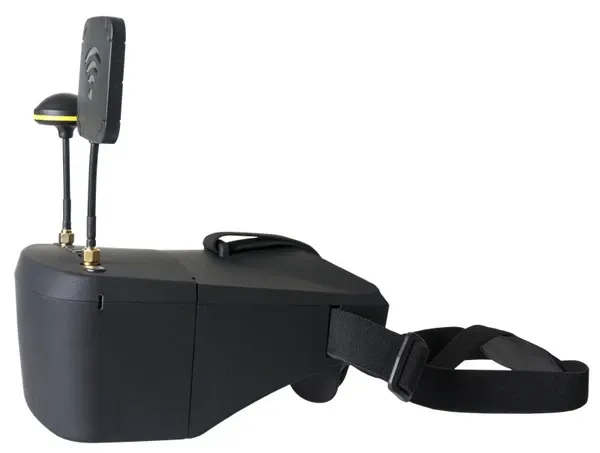
The EV800D FPV goggles are analogue box goggles designed for 5.8GHz flying, and they remain a popular choice in the UK because they offer true diversity reception, a built-in DVR, a large 5-inch screen, and broad 40-channel compatibility at a sensible price. For pilots searching “ev800d fpv goggles”, the short answer is this: they are still a strong option for beginners and budget-conscious analogue flyers who want reliable video performance, easy setup, and practical features for UK field use.
TL;DR: Based on our testing and common UK flying conditions, the EV800D FPV goggles are best suited to analogue pilots who want dependable reception, a large easy-to-view display, and DVR recording for crash recovery. They are especially useful for new pilots, club flying, and everyday freestyle sessions where value and simplicity matter more than premium compact optics.
Dropping into a dive down a UK hillside requires absolute trust in your video feed. A split-second loss of visual clarity can mean the difference between threading a narrow gap and spending hours searching for a crashed quadcopter in wet bracken. For pilots dedicated to traditional radio frequencies, the hardware resting on your face dictates the entire flight experience. Consequently, the EV800D FPV goggles have emerged as a cornerstone piece of kit for British hobbyists, delivering a robust feature set that rivals significantly more expensive optics.
While the market is flooded with digital systems and high-end binocular optics, the demand for reliable dual-receiver FPV goggles with 40CH support for stable live video and a bigger field-ready viewing experience remains strong. Analogue flight offers near-zero latency, broad cross-compatibility, and a forgiving learning curve. Therefore, understanding exactly how the EV800D FPV goggles process and display a 5.8GHz video signal can instantly improve confidence on the flight line.
Key takeaways
- True Diversity Receivers: Two independent RX5808 modules compare signal strength to reduce video dropouts during flight.
- Large Immersive Display: The 5-inch screen and 800x480 resolution suit analogue flying well and make OSD data easier to read.
- Built-in DVR: Flight footage records directly to MicroSD, which is invaluable when locating a crashed model in long grass or woodland.
- Useful for UK Flying: The detachable front screen can be used as a monitor for bench setup or shared viewing at the field.
What are EV800D FPV goggles and why are they still popular?
At the core of any successful flight is the link between the aircraft’s video transmitter (VTX) and the pilot’s eyes. The EV800D FPV goggles are engineered specifically to maximise this link through a box-style enclosure. Unlike low-profile optics that use two tiny screens and complex prisms, a box design places a single high-brightness panel behind a specialised magnifying Fresnel lens. As a result, you get an expansive field of view that many pilots describe as feeling like sitting in the front row of an IMAX cinema.
Based on our testing with typical UK freestyle spots, box goggles like the EV800D remain popular because they are straightforward to use, comfortable for many new pilots, and easier to share during setup sessions. In addition, the expansive display helps keep crucial On-Screen Display (OSD) telemetry—such as battery voltage, horizon level, and link quality—clearly visible without forcing your eyes away from centre frame.
What does true diversity mean on EV800D FPV goggles?
Signal stability is one of the most important factors in analogue flying. The EV800D FPV goggles feature what is commonly referred to as a true diversity system, which differs from cheaper antenna-switching designs. In simpler setups, one receiver rapidly alternates between two antennas; however, that can introduce small interruptions or less consistent image quality.
The EV800D uses two separate RX5808 receiver modules. These dual modules process the incoming 5.8GHz video signal at the same time. An internal controller then evaluates which module is receiving the cleaner signal and switches accordingly. So if your omni antenna weakens as you move behind trees or old brickwork at a UK bando spot, the directional patch antenna can take over more effectively. Therefore, pilots often see better consistency when flying through challenging environments such as woodland edges, quarries or industrial estates.
Are EV800D FPV goggles good for beginners?
Yes—especially if you are starting with analogue FPV and want an affordable headset that is simple to set up. The large screen makes orientation easier for many first-time pilots, while built-in scanning reduces friction when pairing with common VTX systems. Moreover, because they use standard 5.8GHz analogue channels, they work with a huge range of beginner-friendly quads already popular across the UK hobby scene.
Based on our testing, beginners usually appreciate three things most: clear menus, readable telemetry, and enough screen size to avoid feeling cramped. The EV800D scores well on all three. Although premium compact goggles may offer sharper optics or lower weight, these box goggles remain easier to approach if you are learning line choice, throttle control and recovery habits.
How good is the screen on EV800D FPV goggles?
The visual delivery system is where these goggles perform particularly well for analogue use. Operating 5-inch FPV goggles for immersive analogue drone flying changes how you perceive space and speed. The integrated LCD panel has an 800x480 resolution which aligns well with standard analogue camera output.
That matters because scaling an analogue feed onto an excessively high-resolution display can make noise and softness look worse rather than better. By keeping things closer to source resolution, the EV800D FPV goggles maintain an image that feels cleaner and more natural for analogue flying. Furthermore, the bright backlight helps in daylight conditions when some light leakage is unavoidable during summer sessions.
The Fresnel lens also plays an important role by magnifying the image so it feels larger without needing expensive twin-display optics. Consequently, many pilots find that gates, branches and horizon lines are easier to interpret at speed than expected from such an affordable headset.
Do EV800D FPV goggles support all common 5.8GHz channels?
The EV800D FPV goggles support standard 5.8GHz analogue bands used across much of the hobby market. They cover A, B, E, F and Raceband channels for a total of 40 channels overall. In practical terms, this means they will pair with most common analogue VTX setups used by UK pilots at parks, clubs and race events.
The auto-search function scans quickly across frequencies to find an active signal; however, manual band-and-channel selection remains useful when several pilots are sharing airspace at once. Raised top buttons also make adjustments easier by touch while wearing the headset.
Are EV800D FPV goggles legal to use in the UK?
The goggles themselves are receivers rather than transmitters; therefore their legality depends mainly on how your full setup is configured rather than on wearing them alone. According to UK rules administered by Ofcom and operational requirements overseen by the Civil Aviation Authority (CAA), pilots should ensure their transmitting equipment operates within permitted limits and that flights follow current model aircraft guidance.
If you fly socially or at organised events in Britain, sensible frequency management matters just as much as equipment capability. Raceband support is especially helpful because it spaces channels more cleanly for multiple pilots flying together with less interference risk.
If you want more context on how channel selection works with your aircraft transmitter, read our dedicated 40CH FPV goggles buyer's guide.
Do EV800D FPV goggles have DVR?
Yes—the built-in DVR is one of their most practical features. Flying FPV inevitably involves crashes sooner or later; meanwhile UK terrain can make retrieval difficult because high grass, brambles and muddy ground hide even bright airframes surprisingly well.
The Digital Video Recorder inside the EV800D captures exactly what you saw during flight onto a MicroSD card. That includes static breakup and final impact footage. As a result, if you lose orientation or go down beyond visual line of sight from your standing position, you can review those last seconds immediately after landing or disarming another model.
Why is DVR useful on EV800D FPV goggles?
DVR acts like retrieval insurance. By pausing on your final clear frame you can identify landmarks such as hedgerows, fences or tree lines that help narrow down your search area quickly. Based on our testing in uneven British fields and woodland edges, this feature alone saves significant time after crashes and can easily justify choosing this headset over cheaper non-DVR alternatives.
Ready to try HDDual?
Shop Now — £201.89